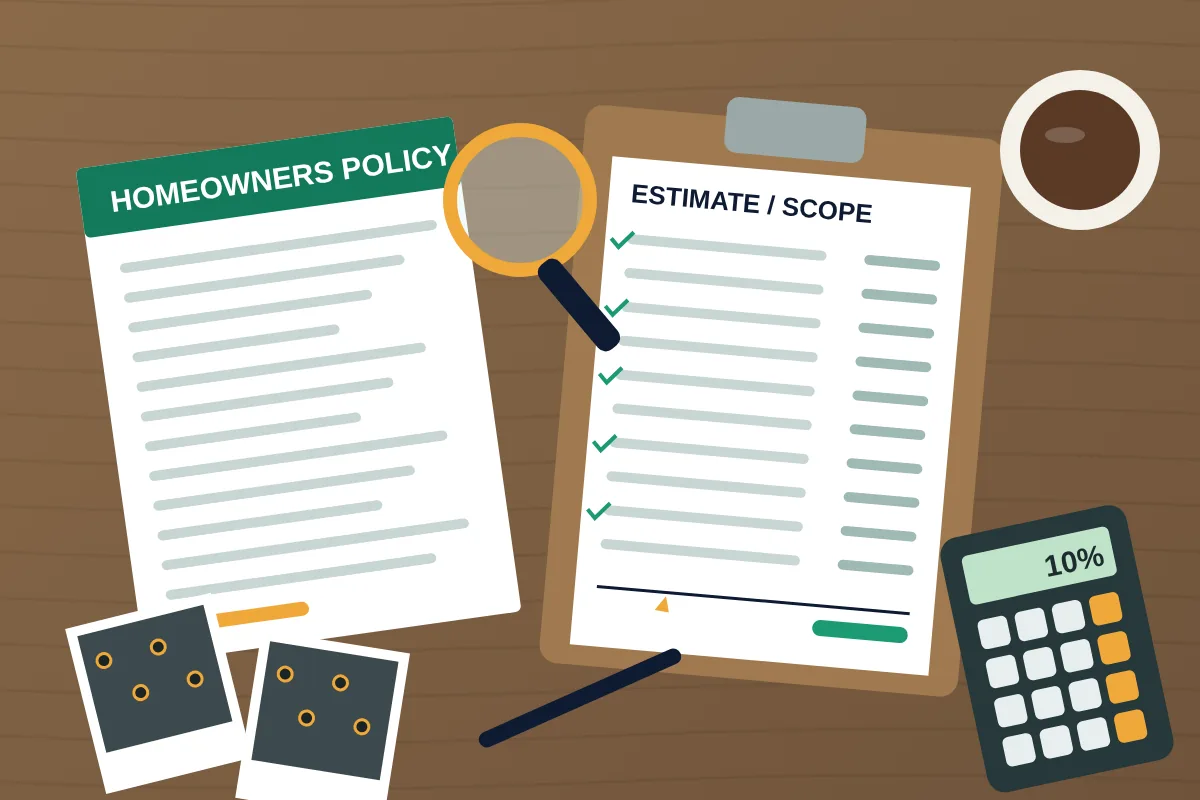
States regulate that fee. In Texas, a public adjuster's fee cannot exceed 10% of the amount the insurer pays, under Insurance Code §4102.104. So when people ask how do public adjusters get paid in Texas, the short answer is: a contract percentage, capped at 10%.
How do public adjusters get paid, step by step?
- The policyholder and PA sign a contract that states the fee percentage and what it applies to.
- The PA documents the loss, prepares the estimate and presents the claim.
- The insurer pays, often by a cheque payable to both the policyholder and the PA firm.
- The fee is deducted according to the contract and the balance goes to the policyholder.
Public adjuster fee examples (Texas 10% cap)
| Claim payment | Fee at 10% | Policyholder receives |
|---|---|---|
| $25,000 | $2,500 | $22,500 |
| $80,000 | $8,000 | $72,000 |
| $300,000 | $30,000 | $270,000 |
A firm may charge less than the cap. Use the public adjuster fee calculator for other amounts.

How the adjuster inside the firm is paid
Firms pay their adjusters in different ways: salary, base plus commission, or a share of fees on their files. That share is the real public adjuster salary, so ask about it before joining a firm.
Other states
Many states cap public adjuster fees, and some set lower caps after declared catastrophes. Always check the specific state's insurance code and department guidance. This is general information, not legal advice; consult a licensed attorney in your state for legal questions.
Frequently asked questions
What percentage do public adjusters take?
It depends on the contract and state law. In Texas the maximum is 10% of the amount paid by the insurer.
Do public adjusters charge upfront fees?
Contingency arrangements, where the fee comes out of the claim payment, are the norm. Read any contract carefully.
Is the public adjuster fee worth it?
That depends on the claim. A PA's goal is to work for a complete and accurate settlement, but no adjuster can promise a specific result.