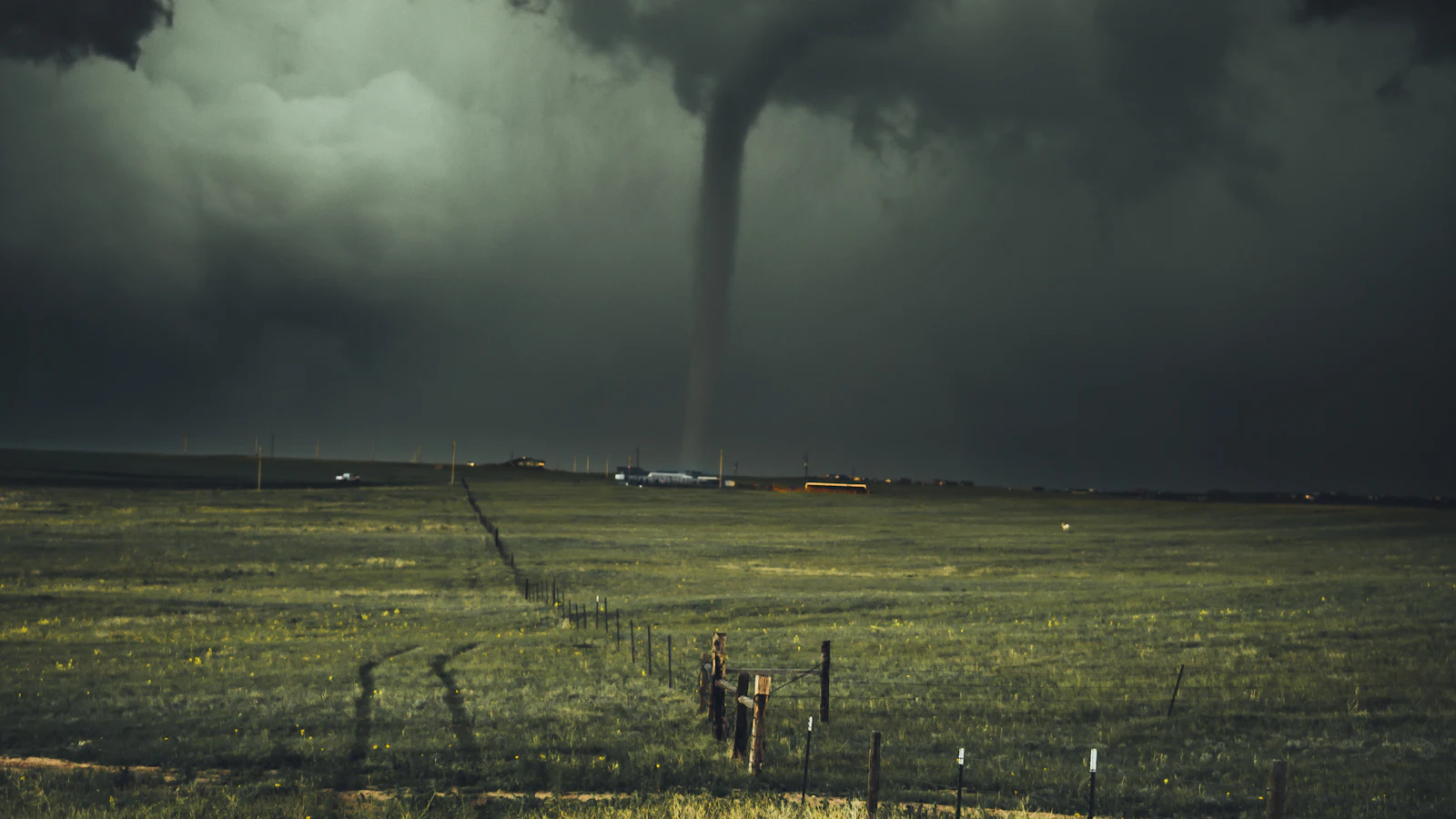
Cat adjuster salary is driven by disasters, not a paycheck schedule: catastrophe adjusters commonly earn $15,000 to $60,000+ per deployment after hurricanes, hail storms, tornadoes and wildfires. The money can be excellent, but it comes in bursts, with long hours, real expenses and quiet stretches in between.
Catastrophe (CAT) adjusters travel to disaster zones to handle the flood of property claims that local staff cannot absorb. Some large carriers employ staff CAT teams on salary, but most catastrophe claims adjusters are 1099 independent adjusters deployed through IA firms.
CAT Adjuster Salary: How CAT Pay Works
Cat adjuster pay usually follows one of two models:
- Fee schedule: You earn a fee per closed claim based on the gross loss, often around $350 to $600 for small claims under $5,000, $1,000 to $2,000 for claims in the $25,000 to $50,000 range, and $3,000+ for large losses. The IA firm splits that fee with you, commonly 65/35 to 75/25 in your favor.
- Daily rate: A flat rate per day worked, commonly $400 to $700 for desk or daily CAT work, and $500 to $800+ for experienced field or commercial adjusters.
Fee schedules reward speed. On simple hail claims, an efficient adjuster can close two to five claims a day. Daily rates are steadier and more common on desk CAT, commercial and complex assignments. For a deeper look at the contractor side, read our independent adjuster salary guide.
Staff CAT Teams vs Independent CAT Adjusters
Not every catastrophe adjuster is a contractor. Several large carriers run their own staff CAT teams. These adjusters earn a regular salary, often in the senior field property range, plus benefits, a company vehicle, travel reimbursement and sometimes overtime or per diem while deployed. Their pay is steadier than an independent adjuster's, and they get paid in quiet seasons too, usually by handling regular property claims between storms.
The tradeoff is the ceiling. A staff CAT adjuster rarely sees the spike that an independent adjuster can earn closing claims on a fee schedule after a major hurricane. Staff teams also deploy wherever the carrier sends them, with less choice about which storms to work.
Independent CAT adjusters choose their deployments, can work for several firms in one season and keep the upside of high-volume weeks. They also carry every cost and every risk: no storms means no income. Many adjusters start on a staff team to learn CAT handling with a safety net, then go independent once they can close claims quickly and accurately.
Sample CAT Deployment Earnings
The examples below are illustrative, using typical fee and daily-rate ranges. Real results depend on the storm, the carrier, your speed and how many claims the firm assigns you.
| Scenario | Length | Pay basis | Estimated adjuster gross |
|---|---|---|---|
| Spring hail storm in Dallas-Fort Worth, residential roofs | 3 weeks | ~45 claims x $500 avg fee at 70% | About $15,750 |
| Desk CAT after a hurricane | 8 weeks, 7 days/week | $500/day daily rate | About $28,000 |
| Texas Gulf Coast hurricane field deployment | 10 weeks | ~110 claims x $700 avg fee at 70% | About $53,900 |
| Experienced field, commercial and large loss | 12 weeks | $750/day daily rate | About $63,000 |
Run your own scenario through the CAT Deployment Earnings Calculator, which lets you adjust claim counts, fees, splits, days worked and expenses.
Storm Seasons and When the Work Comes
CAT work follows the calendar of natural disasters:
- Hurricanes (June to November): Atlantic hurricane season runs June 1 to November 30, with the biggest landfalls typically from August to October. Florida, Texas, Louisiana and the Carolinas see the largest deployments.
- Hail and tornadoes (spring to early summer): The central US, including Texas, Oklahoma, Kansas, Nebraska and Colorado, produces massive hail claim volume from roughly March through June.
- Wildfires (late summer and fall): Mostly in California and the Mountain West, with complex total-loss and smoke claims.
- Winter storms: Freeze events cause burst pipes and roof collapse claims, sometimes in places with little CAT history.
An adjuster who works hail in spring and hurricanes in fall can stay busy most of the year in an active season. In a quiet season, the gaps between deployments are what pull annual income down.
CAT Adjuster Pay in Texas: Hail Alley and the Gulf Coast
No state keeps catastrophe adjusters busier across more of the calendar than Texas. It sits in hail alley, borders the Gulf, and gets hit by tornadoes, freezes and wildfire, so a Texas-based CAT adjuster can often work multiple event types in one year without leaving the state.
- March to June, hail and tornadoes: Dallas-Fort Worth, Central Texas and the Panhandle produce heavy residential roof volume, ideal for fee-schedule adjusters who close claims fast.
- June to November, Gulf hurricanes: Houston, Galveston, Corpus Christi and Beaumont see wind and surge deployments that can run for months.
- December to February, winter freezes: The February 2021 winter storm generated huge numbers of burst-pipe and water damage claims statewide.
- Wildfire: West Texas and the Panhandle carry real wildfire risk in dry years.
Texas pay follows the same fee schedules and daily rates described above; there is no special Texas rate. The advantage is volume and proximity: less travel, lower lodging costs and more deployments within driving distance, which raises net income. Texas staff adjusters earn roughly in line with the national BLS median of $76,790 (our estimate for Texas is about $76,800), with Dallas-Fort Worth and Houston running slightly higher. See the full breakdown in our insurance adjuster salary Texas guide or compare states on the salary by state page.
What Deployment Life Is Really Like
Deployments last anywhere from two weeks to several months. Seven-day workweeks and 12-hour days are common, especially in the first weeks after a storm. A typical day looks like:
- Early morning: route your inspections and call policyholders to confirm appointments.
- Daytime: drive, inspect, climb roofs, measure, photograph and talk with homeowners and contractors.
- Evening: write estimates in Xactimate, upload photos and reports, and close files.
You may be living in a hotel, an RV or a shared rental, sometimes far from the storm because local lodging is full or damaged. Policyholders are often stressed and some have lost everything, so patience and clear communication matter as much as estimating skill.
Costs That Cut Into Catastrophe Adjuster Pay
Gross numbers overstate what you keep. Independent CAT adjusters typically pay for:
- Lodging, food and laundry for weeks or months
- Fuel and heavy wear on your truck
- Ladders, harness, tablet, moisture meter and other tools
- An Xactimate subscription and other software
- Licenses in the states you deploy to, plus continuing education
- Your own health insurance and self-employment tax
Some firms reimburse mileage or provide lodging on certain assignments, so ask before you commit. Even so, plan on spending a meaningful share of gross on expenses during a deployment.
CAT Adjuster Salary vs Burnout
The best cat adjuster salary years are also the most exhausting. Back-to-back deployments, missed family events, irregular sleep and roof work in the heat take a toll. Many adjusters cap themselves at two or three deployments a year, or alternate CAT work with steady daily claims.
Burnout also hurts earnings directly. Tired adjusters make estimate errors, generate reinspections and supplements, and get fewer assignments next season. Protecting your health is part of protecting your income.
How to Become a CAT Adjuster
- Get licensed. Many adjusters hold a Texas all-lines license as a designated home state license, plus a Florida 6-20 license for hurricane work. Florida also issues emergency licenses after declared disasters. A pre-licensing course like AdjustingOnline covers the exam. Use joe20 for 20% off. See what that license is worth in our Texas adjuster license salary guide.
- Build Xactimate skills until you can write a full roof and interior estimate quickly.
- Join several IA firm rosters and keep your profiles current.
- Take a first deployment, even a desk or small hail storm, to build a track record.
CAT work is one of the highest-ceiling paths in claims, but it is not the only one. Compare it with steady staff roles in our insurance adjuster salary guide and the property adjuster salary breakdown.
Frequently asked questions
How much does a cat adjuster make per deployment?
Earnings per deployment commonly range from $15,000 to $60,000 or more, depending on how long the deployment lasts, how many claims you close, and whether you are paid on a fee schedule or a daily rate.
What is a typical cat adjuster salary for a full year?
Because CAT adjusters are usually independent contractors, annual income varies widely. Average active years commonly land between $70,000 and $120,000, while experienced adjusters in big storm years can reach $150,000 to $250,000 or more. Slow years can drop to $30,000 to $60,000.
When is catastrophe adjuster season?
Atlantic hurricane season runs June 1 to November 30, with most major landfalls from August through October. Hail and tornado season peaks in spring and early summer across the central US, and wildfire claims cluster in late summer and fall in the West.
How long do CAT deployments last?
Most deployments last anywhere from two weeks to several months. Large hurricanes can keep adjusters working the same region for three months or longer as reinspections and supplements come in.
Do cat adjusters pay their own expenses?
Usually yes. Independent CAT adjusters typically cover their own travel, lodging, food, fuel, tools and Xactimate subscription, and pay self-employment tax, so net income is well below gross.