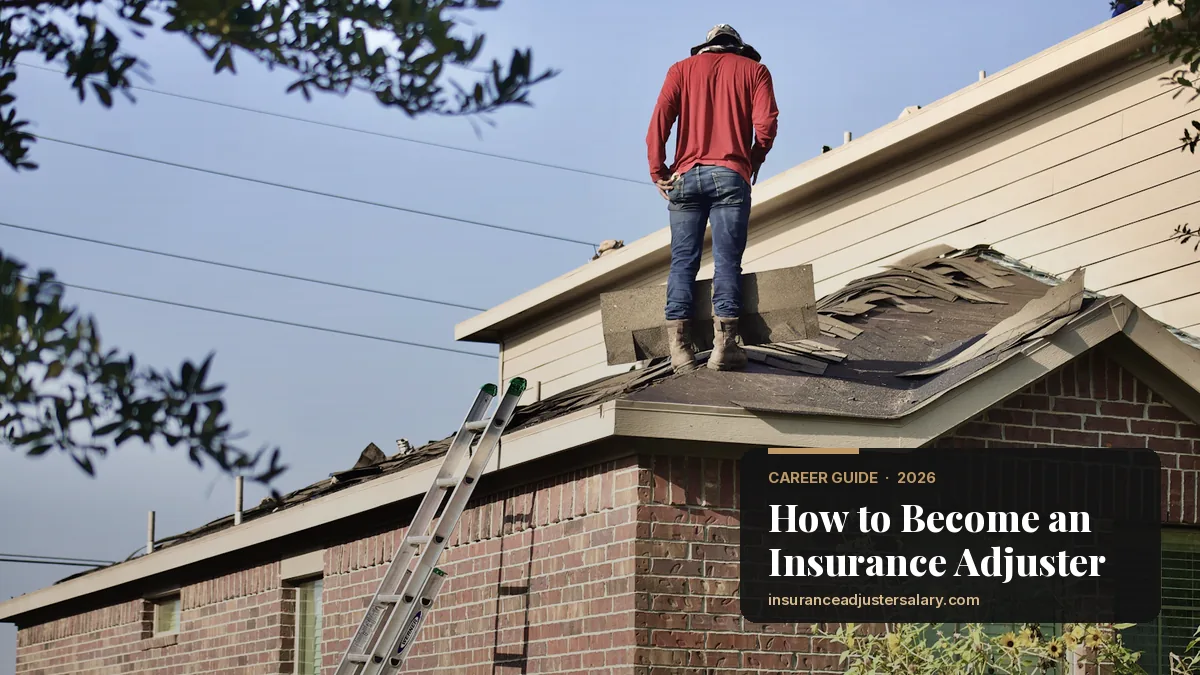
An insurance adjuster license is the credential most states require before you can investigate, negotiate or settle claims, and getting one is simpler than most people expect. You pick a home state, finish the education and exam that state requires, get fingerprinted, apply, and then add other states as your work demands. This guide explains how the process works nationwide, where people get stuck, and how to keep the license active once you have it.
What an insurance adjuster license actually is
An insurance adjuster license is permission from a state insurance department to handle claims for insurers or policyholders in that state. It is not a degree and it is not a job offer. It simply shows regulators that you passed the state's screening, cleared a background check and agreed to follow its claims rules.
Licenses are issued by states, not by the federal government, so there is no single national adjuster license. Each state decides who needs a license, which exams apply, which fees you pay and how often you renew. Two things follow from that. First, a license that works well in one state may do very little for you in another. Second, anything we say about a specific rule is a starting point, not the final word. Confirm details with your state insurance department before you spend money.
It also helps to separate adjuster licenses from other insurance credentials. An agent or producer license covers selling policies. An adjuster license covers claims. A public adjuster license is a separate license for people who represent policyholders for a fee. This page focuses on the adjuster license that staff and independent adjusters use. If you are weighing career paths first, start with our guide on how to become an insurance adjuster.
Who needs an insurance adjuster license?
Most independent adjusters and many staff adjusters need one, but exceptions exist, and they vary widely by state. Typical patterns include:
- Independent adjusters working on storm and catastrophe claims almost always need a license in each state where they adjust, or an emergency license after a declared disaster.
- Staff adjusters employed by a carrier may be exempt in some states, but many carriers still require or reward a license because it makes them deployable.
- Public adjusters need a separate public adjuster license in the states that regulate them.
- Auto damage appraisers and desk adjusters may fall under different rules depending on the state and the exact duties.
Even where a license is optional, hiring managers and independent adjusting firms usually treat it as the baseline. If you are early in the process, getting licensed before you apply makes you a much easier hire.
Home state vs. designated home state
This is the part that confuses new adjusters the most, and it is the first decision you make. Your home state is normally the state where you live. If that state issues adjuster licenses, you generally apply there first, and that license becomes the base for any non-resident licenses you add later.
Some states do not license adjusters, so a resident has nowhere local to start. In that case you can usually choose a designated home state (DHS): a state that does issue licenses, whose license you then use as your home license. Texas is the best-known example, and many adjusters nationwide hold a Texas all-lines license for exactly this reason. Our Texas adjuster license guide walks through that route, including costs and payoff.
| Your situation | Usual starting point | What to check |
|---|---|---|
| Your state licenses adjusters | Apply for a resident license in your own state | Exam, education and fingerprint rules at your state insurance department |
| Your state does not license adjusters | Choose a designated home state such as Texas | Whether that state accepts non-residents and how it treats DHS applicants |
| You already hold a license and want storm work | Apply for non-resident licenses in target states | Reciprocity rules, fees and any certificate of authority requirements |
| You want to represent policyholders | A public adjuster license, which is separate | Bond, fee limits and contract rules in your state |
Pick the home or designated home state carefully. Your base license affects every non-resident license you add later, and changing it down the road usually means more paperwork.
How to get your insurance adjuster license, step by step
The details differ by state, but the sequence is similar almost everywhere.
- Check your state's rules. Open your state insurance department website and look for adjuster licensing. Note whether it requires education, an exam, fingerprints and a bond or fee.
- Choose the line of authority. Many states offer an all-lines or property and casualty adjuster license, while others split licenses by line. Pick the one that matches the work you want.
- Complete pre-licensing education if required. Some states require a set number of hours. Others accept a course in place of an exam, and some require only the exam.
- Pass the exam. Depending on your state, this is a proctored state exam or an approved course final. Keep proof of completion.
- Get fingerprinted. Most states run a background check. Your application usually will not finish until the fingerprint results come back.
- Apply and pay. Most states take applications online, often through NIPR (the National Insurance Producer Registry) or Sircon. Fees vary, so use the amount your state lists, not a number from a forum post.
- Receive your license and record it. Save your license number, effective date and renewal date. You will need all three for non-resident applications and job paperwork.
How long does it take?
Study time depends on you, and processing time depends on your state. People often finish a course in a couple of weeks, then wait on fingerprints and the application. Plan for a few weeks overall, and allow longer if your background check has anything that needs explaining.
Study and exam prep for the insurance adjuster license
If your state requires an exam, a good course plus a few practice tests is the usual recipe. Look for material that matches your state, because state law sections matter on most exams. If you want a structured online option, the AdjustingOnline courses cover Texas all-lines licensing and other adjuster training; use code joe20 for 20% off.
Printed study guides can add extra practice. One caution: most books on Amazon cover the property and casualty agent license exam, not the adjuster exam. They overlap on policy basics, coverage and insurance law, which helps general understanding, but they are not a substitute for a course or the state-specific material your adjuster exam covers. Options that show up in the results, listed by type:
- Property and Casualty Insurance License Study Guide with a large practice-question bank, rated 4.8 stars from 73 ratings at the time we checked.
- Property and Casualty Insurance Exam Success, a practice-test-heavy option rated 4.5 stars from 183 ratings.
- Property and Casualty Insurance License Exam Study Guide (3rd Edition), a longer-running study book rated 4.3 stars from 333 ratings.
- Texas Property and Casualty Insurance License Exam Prep, with a state law supplement, rated 4.4 stars from 172 ratings. It is most useful if you are studying Texas rules.
Whatever you choose, check the edition year and confirm it fits your state before you buy. Insurance law changes, and outdated material can waste study time.
Exam day tips
- Take timed practice tests so the pace feels familiar.
- Spend extra time on state-specific claims laws and unfair claims practice rules, which many people underestimate.
- Read the testing center's ID and arrival rules ahead of time.
- Keep every receipt, confirmation and certificate until the license posts.
Adding non-resident insurance adjuster license states
Your first insurance adjuster license gets you started. Additional states get you deployed. After a hurricane, hailstorm or wildfire, independent firms staff up quickly, and they favor adjusters who already hold the license in the affected state.
Many states offer non-resident or reciprocal licenses to adjusters who hold a license in good standing in their home state. The process is typically an online application plus a fee, rather than a second exam. Some states add their own conditions, so read each state's page before applying.
Many storm adjusters add licenses in this general order:
- Home state or DHS license first.
- Florida, a heavy catastrophe market with its own all-lines adjuster license. Our Florida adjuster salary guide explains why many add it early.
- Gulf Coast and Southeast states, followed by hail and tornado states in the central US, based on where your firm deploys.
Emergency adjuster licenses
After a declared disaster, some states let insurers or adjusting firms register temporary emergency adjusters. Those licenses are short-term, they come with conditions, and they depend on the employer registering you. Treat an emergency license as a way into a single deployment, not a replacement for a permanent license.
What an insurance adjuster license costs and what it can earn you
License costs are modest compared with most professional credentials. Expect to pay for education or study material, an exam fee where applicable, fingerprinting, the state application fee, and later non-resident fees and continuing education. Exact amounts change, so use your state department's current fee schedule and the course provider's current price instead of any figure copied from a blog.
The return depends on the role you land. The BLS median pay for claims adjusters, appraisers, examiners and investigators is $76,790 a year (May 2024). By our estimates, entry-level staff adjusters often start around $45,000 to $60,000, and licensed staff adjusters commonly fall around $50,000 to $90,000 depending on experience, line of business and location. Independent and catastrophe adjusters can earn more in busy years but with larger swings. For deeper breakdowns, see how much insurance adjusters make and entry-level claims adjuster salary, or plug in your own numbers with the Adjuster Salary Calculator.
Keeping your adjuster license active
Getting licensed is half the job. Staying licensed protects your income, especially if you work storms, because a lapsed license can take you off rosters right when work appears.
- Know every renewal date. Each state sets its own cycle. Texas uses a two-year cycle, and other states differ.
- Complete continuing education on time. CE hour requirements and approved providers vary, and some states have specific topic requirements such as ethics.
- Keep your contact details current. States send renewal notices to the address on file.
- Report required changes. Address changes, name changes and certain legal events often must be reported within a set time.
- Keep records. Save CE certificates and renewal confirmations for every state you hold.
A simple spreadsheet with each state, license number, renewal date and CE hours earned prevents most lapses. If you hold many non-resident licenses, set calendar reminders well before each deadline.
Common insurance adjuster license mistakes to avoid
- Choosing the wrong home state. If you want storm work, check which base license your target firms prefer before you apply.
- Using outdated study material. State law and exam outlines change, so confirm the edition year.
- Assuming one license covers every state. Reciprocity usually still requires an application in each state.
- Ignoring continuing education. Late CE is a common cause of lapses and late fees.
- Mixing up license types. Agent, adjuster and public adjuster licenses are different, and the wrong one will not let you do the work you want.
- Skipping the practical skills. A license opens doors, but employers still want estimating software skills such as Xactimate and solid report writing.
What to do right after you get licensed
Once your license posts, put it to work quickly. Update your resume with your license number, home state and any non-resident states, then apply to carrier trainee programs, desk catastrophe teams and independent adjusting firms. Many firms ask for estimating software experience, so consider training in that next. For an overview of what the work pays by role, compare claims adjuster salary with independent adjuster salary, and use the salary by state explorer to see how location changes pay.
If your goal is deployment pay, the CAT deployment calculator shows how daily rates and deployment length add up. With a valid insurance adjuster license, an active renewal calendar and a few extra states, you are in a strong position when the next big claim event hits.
Frequently asked questions
How do I get an insurance adjuster license?
Choose your home state (or a designated home state if yours does not license adjusters), complete any required pre-licensing education, pass the exam your state requires, get fingerprinted, and submit the application and fee, usually online through NIPR or Sircon. Requirements differ by state, so confirm the current steps with your state insurance department.
Do all states require an insurance adjuster license?
No. Most states license at least some adjusters, but a few do not license adjusters at all, and many states exempt certain people such as company employees handling limited lines. Always check the rules for the state where you will adjust claims and for the type of adjusting you plan to do.
What is a designated home state (DHS) license?
If the state where you live does not issue adjuster licenses, you can usually hold a license from another state that does, such as Texas, and designate it as your home state. That license is then the base you use to apply for non-resident licenses elsewhere. Each state sets its own rules, so confirm eligibility before you pay.
Can I adjust claims in other states with one license?
Not automatically. Many states offer non-resident or reciprocal licenses based on your home state license, which usually means an application and fee instead of a second exam. After a declared disaster, some states also issue temporary emergency adjuster licenses, with their own conditions.
How long does an insurance adjuster license last?
It depends on the state. Many licenses renew every one to two years and require continuing education before each renewal; Texas, for example, uses a two-year cycle. Missing a renewal or CE deadline can lapse the license, so track the dates for every state you hold.
Is an adjuster license the same as an insurance agent license?
No. Agent licenses cover selling insurance, while adjuster licenses cover investigating and settling claims. The topics overlap, so some agent exam guides help with general insurance concepts, but they do not replace an adjuster course or the exam your state requires for adjusters.