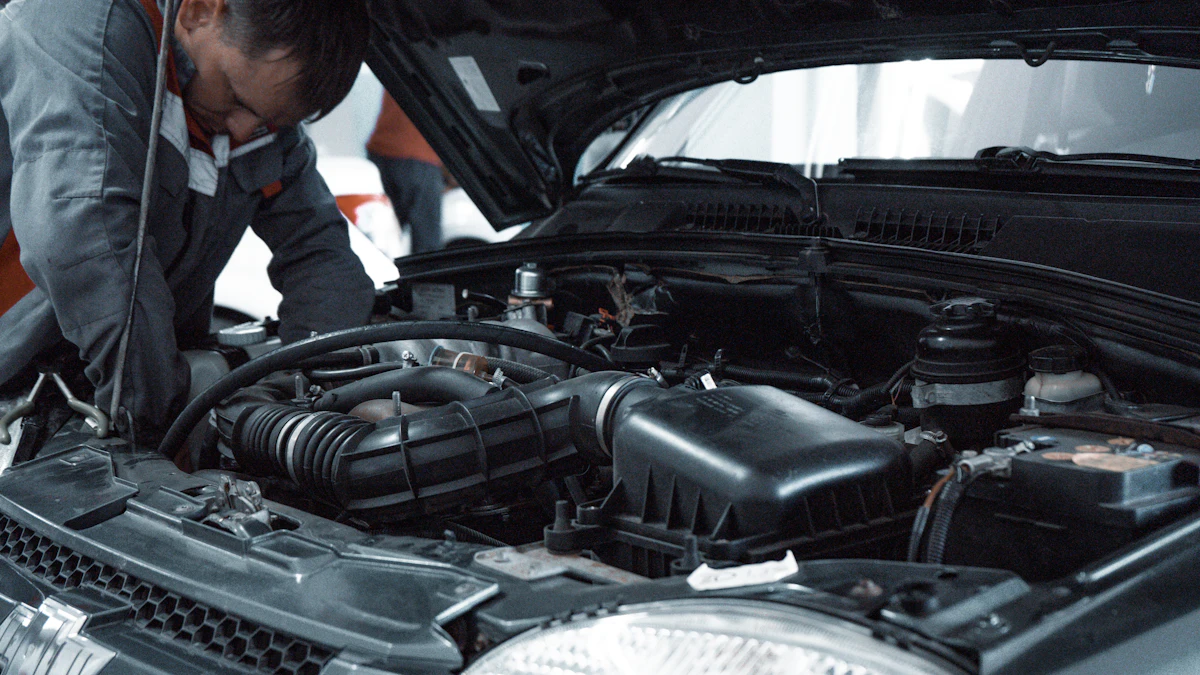
Auto adjuster salary in 2026 ranges from about $50,000 for a new material damage adjuster to $88,000 or more for an experienced bodily injury specialist. Auto claims is the highest-volume line in insurance, and the role you hold within it, from damage appraiser to injury negotiator, matters far more than the title "auto adjuster."
Every car accident can create several claims at once: vehicle damage, rental, liability decisions and injuries. Carriers split that work into specialized teams, and each one has its own pay band and career path.
Auto Adjuster Salary by Role
These are typical staff (W-2) ranges based on industry estimates and the job postings we track. Region, carrier and experience all move the numbers.
| Auto claims role | Typical base salary | Main responsibility |
|---|---|---|
| Auto claims trainee | $45,000 - $55,000 | First notice of loss, simple damage claims, training classes |
| Material damage (desk) adjuster | $50,000 - $65,000 | Photo estimates, repair shop coordination, rentals |
| Field auto appraiser | $55,000 - $72,000 | In-person vehicle inspections at shops, homes and tow yards |
| Total loss adjuster | $50,000 - $68,000 | Vehicle valuation, title transfer, lienholder payoffs |
| Liability adjuster | $55,000 - $75,000 | Investigating fault, statements, police reports, subrogation |
| Bodily injury adjuster | $60,000 - $88,000 | Medical evaluation, attorney negotiation, injury settlements |
For comparison, the BLS reports a May 2024 median of $76,790 a year for the full group of claims adjusters, appraisers, examiners and investigators. Most auto material damage roles sit below that median, while experienced bodily injury adjusters can sit at or above it.
Material Damage and Field Appraiser Pay
Material damage (MD) adjusters handle the vehicle itself. On the desk, that means reviewing photos submitted through an app, writing estimates in software such as CCC, Mitchell or Audatex, approving supplements from repair shops and arranging rentals. It is fast-paced and high volume.
Field appraisers do the same work in person: they drive to body shops, homes and salvage yards to inspect vehicles. Field auto adjuster salary usually lands in the upper half of the MD range, and many carriers add a company car, gas card, laptop and phone. Those perks, plus benefits, often add $8,000 to $15,000 of value a year.
Mechanical knowledge helps more than people expect. Adjusters who can spot prior damage, understand repair procedures and push back on inflated supplements close files faster and earn better reviews.
Liability and Bodily Injury Adjuster Salary
Liability adjusters
Liability adjusters decide who is at fault. They take recorded statements, pull police reports, review scene photos and dash cam footage, apply state negligence rules and pursue subrogation against other carriers. Pay commonly runs $55,000 to $75,000.
Bodily injury adjusters
Bodily injury adjuster salary is the top of the auto ladder, commonly $60,000 to $88,000, with senior and litigation adjusters above that. BI adjusters review medical records and bills, evaluate injuries, set reserves, and negotiate settlements with claimants and their attorneys. The job requires strong judgment and communication, and it carries the most settlement authority in auto claims.
Most BI adjusters start in material damage or liability, then move up after one to three years. If injury work appeals to you, also compare it with our workers comp adjuster salary guide, since the medical and negotiation skills overlap.
Total Loss Adjusters
When repair costs exceed a vehicle's value (or a state's total loss threshold), the claim goes to a total loss team. These adjusters determine actual cash value using valuation reports and comparable vehicles, explain the offer to the owner, handle loan and lease payoffs, and process title and salvage.
Pay is similar to material damage, roughly $50,000 to $68,000. The role is a good fit for detail-oriented adjusters, and the negotiation practice with frustrated owners is useful preparation for liability and injury roles.
Independent Auto Adjuster Salary and Per-Claim Pay
Independent auto appraisers work as 1099 contractors for IA firms and appraisal companies. Instead of salary, they earn a flat fee per assignment, commonly around $100 to $250 per auto appraisal depending on the market, vehicle type and travel distance. Heavy equipment, exotic cars and commercial trucks pay more.
A rough illustration:
- 4 appraisals a day x $150 average in Houston or Dallas-Fort Worth = $600 a day on a busy day
- Daily volume is rarely steady; about 160 full-volume days a year = roughly $96,000 billed
- After a firm split, if one applies, plus fuel, vehicle wear, software, insurance and self-employment tax, take-home is often closer to $55,000 to $70,000
Many independent auto adjusters keep volume steady with daily work, then pick up hail CAT assignments, where dealer lots and neighborhoods produce huge numbers of vehicle claims at once. See our independent adjuster salary guide for a full gross-vs-net breakdown.
Auto Adjuster Salary in Texas
Texas is one of the biggest auto claims markets in the country. Dallas-Fort Worth and Houston have enormous traffic volumes, long commutes and sprawling highway systems, which keep carriers hiring material damage, liability and injury adjusters year-round. Texas staff auto pay runs roughly in line with national ranges, and our statewide staff adjuster estimate sits near $76,800, close to the BLS national median.
What makes Texas different is hail. Every spring, storms across DFW, Central Texas and the Panhandle damage huge numbers of vehicles at once, from dealer lots to parking garages. Carriers respond with drive-in hail catastrophe sites where appraisers inspect car after car, and independent appraisers can stack far more paid inspections per day than in normal field work.
| Texas auto role (estimate) | Typical pay |
|---|---|
| Desk material damage | $50,000 - $65,000 |
| Field appraiser (DFW, Houston) | $55,000 - $72,000 + company car |
| Bodily injury adjuster | $60,000 - $88,000 |
| Independent hail appraiser | Per-vehicle fees, peak March-June |
Spanish-language skills are especially valuable in Texas auto claims. For metro-by-metro estimates, see our insurance adjuster salary Texas guide.
What Affects Auto Claims Adjuster Pay
Two adjusters with the same title can earn very different amounts. The factors that move auto insurance adjuster salary most are:
- Settlement authority. The more you can approve without a supervisor, the more you are worth. Authority grows with experience and file quality.
- Location. Large metro areas with heavy traffic and higher costs of living tend to pay more, and field appraisers in rural territories may earn extra for long drives.
- Injury exposure. Any role that touches bodily injury, from a mixed liability and BI desk to a dedicated litigation unit, pays more than pure vehicle damage work.
- Bilingual skills. Many carriers pay a differential for Spanish-speaking adjusters because so much auto work happens by phone.
- Performance metrics. Carriers track cycle time, estimate accuracy, customer satisfaction and severity. Strong numbers drive merit raises and promotions.
- Shift and schedule. First notice of loss and catastrophe auto teams sometimes pay premiums for evenings, weekends or overtime during storm surges.
If you are comparing offers, look at the full package. A $62,000 field appraiser job with a company car can beat a $66,000 desk offer once fuel and vehicle costs are counted.
Auto Adjuster Salary Progression
A typical path for car insurance claims adjusters looks like this:
- Year 0-1: Trainee or desk MD at $45,000 to $60,000, learning estimating software and claim handling.
- Year 1-3: Field appraiser, total loss or liability at $55,000 to $72,000.
- Year 3-5: Bodily injury adjuster at $60,000 to $88,000.
- Year 5+: Senior BI, litigation, team lead or supervisor, often $85,000 and up.
Some adjusters move sideways into property claims, which often pays more in the field. Our property adjuster salary guide covers that route.
How to Start as an Auto Adjuster
Auto claims is one of the easiest doors into the industry because carriers hire large trainee classes year-round. To stand out:
- Get your adjuster license before applying. An online course from AdjustingOnline prepares you for the exam. Use joe20 for 20% off. Many auto adjusters choose the Texas adjuster license for its reciprocity.
- Highlight customer service, negotiation or automotive experience on your resume.
- Ask about field appraiser openings if you prefer driving to a desk.
Pay varies by region, so check insurance adjuster salary by state (start with Texas), and model offers with the Adjuster Salary Calculator. Start in auto, build skills fast, and the jump to bodily injury pay is well within reach.
Frequently asked questions
How much does an auto claims adjuster make?
Staff auto claims adjusters typically earn $50,000 to $72,000 in material damage and appraisal roles, and $60,000 to $88,000 in bodily injury and casualty roles. Senior injury and complex liability adjusters can earn more.
What does a car insurance adjuster make as a field appraiser?
Staff field appraisers commonly earn in the upper part of the $50,000 to $72,000 material damage range, often with a company car. Independent auto appraisers are usually paid per appraisal, commonly around $100 to $250 each.
Do bodily injury adjusters make more than material damage adjusters?
Yes. Bodily injury adjusters evaluate medical records, negotiate with attorneys and hold larger settlement authority, so they typically earn $60,000 to $88,000, compared with $50,000 to $72,000 for most material damage roles.
What does an auto adjuster make in Texas?
Our estimate is that Texas staff auto adjusters earn about $50,000 to $72,000 in material damage roles and $60,000 to $88,000 in bodily injury, with Dallas-Fort Worth and Houston toward the top. Spring hail adds extra work for independent appraisers.
Is auto adjusting a good entry point into claims?
Yes. Carriers hire large classes of auto trainees, the claims are high volume and teach core skills quickly, and auto adjusters commonly move into liability, bodily injury or property roles within a few years.